Key Takeaway
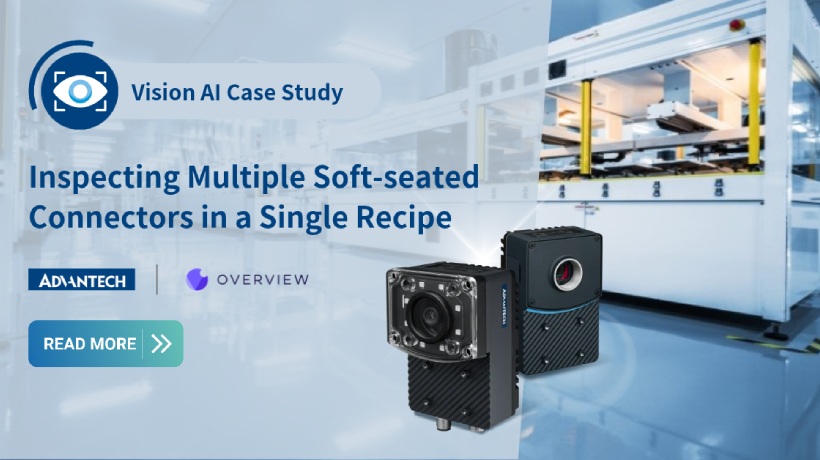
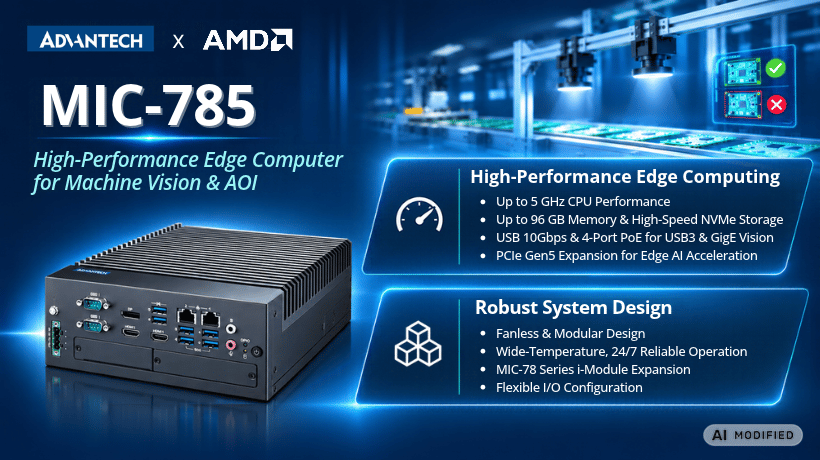
As industrial machine vision demands faster processing, low latency, deterministic control, the MIC-785, powered by AMD Ryzen™ Embedded 7000/9000 and EPYC™ 4005 Series processors, delivers high-performance edge computing with modular flexibility for simplified integration and scalable deployment.
Introduction
Machine vision has become an important part of modern industrial automation, supporting applications from product identification and classification to quality inspection and defect detection. To reduce system reliance on external processing resources, which can present network latency issues and connectivity dependencies, artificial intelligence (AI) models for machine vision are increasingly being deployed at the edge. Still, many advanced systems are moving beyond basic image capture and conventional rule-based inspection.
These shifts create new challenges for system architects. Modern systems may need to acquire and process higher-resolution images across multiple simultaneous camera streams to support more advanced AI workloads. Real-world conditions can also increase machine vision complexity: lighting conditions may vary, smooth surfaces can create reflections, and complex or irregular objects may require three-dimensional vision, such as stereo-camera systems, to resolve their shape and determine their position.
Pick-and-place systems demonstrate how these requirements can intersect with industrial robotics. Here, the range of products handled by a single machine may include different sizes, shapes, orientations, and packaging types, requiring machine vision and AI models to quickly and accurately identify each object before robotic control systems can execute handling workloads.
To support these applications, a machine vision system’s underlying computing platform must meet several computational requirements, including high-performance, low-latency processing. At the same time, it must also reduce barriers to system expansion, since workloads evolve and complete system replacement presents capital expenditure and operational downtime concerns. The Advantech MIC-785 addresses these issues through a modular industrial edge platform based on AMD Ryzen™ Embedded 7000 Series, Ryzen™ Embedded 9000 Series, and EPYC™ 4005 Series processors.
Design and Deployment Challenges for Industrial Machine Vision
For industrial machines, reliability is an important requirement for ensuring operational stability and continuity. Systems deployed across production lines, manufacturing and inspection processes, and other factory equipment are often subjected to dusty environments, high levels of shock and vibration, wide operating temperatures, and other environmental challenges. When implementing AI and machine vision under these conditions, computing platforms often require robust builds that support 24/7 operations with minimal maintenance requirements.
Another consequence of advanced machine vision is the increasing use of heterogeneous computing architectures. CPU resources may be responsible for host computing, image-processing stages, application logic, control-related computation, and associated system tasks. More computationally intensive parallel machine vision and edge AI workloads may then require discrete GPU-based acceleration, particularly where applications involve multiple concurrent vision workloads or highly sophisticated AI models.
The time available to perform this processing is also important. Image acquisition, preprocessing, analysis, inference, and the subsequent system response must all occur within the application’s available process window. In a quality inspection system, for example, an image must be captured and analyzed with sufficient time remaining for downstream rejection or handling mechanisms to respond. And as production-line speeds and robotic cycle rates increase, the available processing windows shrink. Predictable processing latency and timing therefore become increasingly important to maintain system coordination.
Data movement presents another challenge. Multiple high-resolution cameras can substantially increase image-data throughput, and each industrial vision system may require a different combination of USB cameras, GigE Vision or PoE cameras, frame grabbers, storage, networking, serial or digital I/O, and other industrial interfaces. Local image retention and logging can add further storage and bandwidth requirements. Moreover, AI model complexity, inference performance requirements, and cycle time vary from application to application.
As a result, industrial machine vision hardware cannot be one-size-fits-all. A fixed system may provide either insufficient capability for evolving requirements or unnecessary additional hardware that individual deployments do not require. Nevertheless, maintaining multiple computing platforms across deployments increases selection, sourcing, integration, and validation requirements.
What system designers need is a scalable host compute platform that allows them to combine an appropriate level of CPU performance with the application-specific GPU acceleration, high-speed camera interfaces, storage, networking, and industrial I/O required for building a specific system.
MIC-785: Scaling Machine Vision Performance with AMD CPUs
Designed for industrial machine vision and high-end machine controller applications, the Advantech MIC-785 is a rugged, high-performance embedded industrial PC (IPC) with a fanless base system that supports reliable operation in harsh industrial environments. It offers a modular concept that accelerates custom system configuration while easing system integration and allowing for flexible deployment approaches.
A Scalable AMD Processor Portfolio
The MIC-785 supports several processor options spanning AMD Ryzen™ Embedded 7000 Series, Ryzen™ Embedded 9000 Series, and EPYC™ 4005 Series families. Shown in Table 1, this range allows CPU resources to be selected according to application complexity rather than imposing the same computing configuration across every machine in a deployment.
Table 1: AMD processor options for the Advantech MIC-785.
| Processor |
Cores |
Threads |
Max. boost clock |
Base clock |
L3 cache |
| AMD Ryzen™ Embedded 7000 Series |
|||||
| Ryzen™ 9 PRO 7945 | 12 | 24 | 5.4 GHz |
3.7 GHz |
64 MB |
| Ryzen™ 7 PRO 7745 |
8 | 16 | 5.3 GHz |
3.8 GHz |
32 MB |
| Ryzen™ 5 PRO 7645 |
6 | 12 | 5.1 GHz |
3.8 GHz |
32 MB |
| AMD Ryzen™ Embedded 9000 Series |
|||||
| Ryzen™ 7 9700X |
8 | 16 |
5.5 GHz |
3.8 GHz |
32 MB |
| Ryzen™ 5 9600X |
6 | 12 | 5.4 GHz |
3.9 GHz |
32 MB |
| AMD EPYC™ 4005 Series |
|||||
| EPYC™ 4545P |
16 | 32 | 5.4 GHz |
3.0 GHz |
64 MB |
| EPYC™ 4465P |
12 | 24 | 5.4 GHz |
3.4 GHz |
64 MB |
| EPYC™ 4345P |
8 | 16 | 5.5 GHz |
3.8 GHz |
32 MB |
| EPYC™ 4245P |
6 | 12 | 5.4 GHz |
3.8 GHz |
32 MB |
Simpler machine vision systems with relatively moderate host compute requirements can use the six- or eight-core options, while high-end configurations can scale to processors with 12 or 16 cores to support greater computational demands. Across the supported portfolio, maximum boost frequencies extend beyond 5 GHz, with Advantech benchmark testing demonstrating performance advantages over comparable alternative processing solutions.
By providing a consistent computing foundation based on AMD processor platforms, the MIC-785 offers an upgrade path across compatible processor generations. This allows processing resources to be scaled and adapted as requirements change, helping extend platform longevity while reducing lifecycle costs.
Homogeneous Multicore Processing for Industrial Vision
Within the MIC-785, AMD’s full-performance CPU cores provide consistent processing resources throughout each processor option—another differentiator from comparable solutions. This allows applications to more easily distribute concurrent machine vision and general-purpose workloads across available CPU cores and reduce bottlenecks caused by large volumes of simultaneous imaging data.
To support these multicore workloads, the MIC-785 integrates dual-channel DDR5 RAM operating at 5200 MHz with a maximum capacity of 96 GB. This provides substantial memory capacity for data-intensive workloads while supporting rapid data movement between memory and CPU resources. In conjunction, large L3 caches keep frequently accessed data closer to the CPU, reducing the need to retrieve it from system memory.
Why High CPU Clock Frequency Matters
Since processing pipelines can contain serial or lightly threaded stages, many aspects of machine vision cannot simply be accelerated by assigning additional CPU cores. Image preprocessing and processing operations, application logic, and some latency-sensitive control-related calculations can all include work whose execution time depends heavily on the performance available to individual threads.
High single-core and boost-frequency capability can therefore be valuable for enabling faster completion of latency-sensitive CPU processing stages. This in turn reduces the overall time taken for a machine vision system to perceive an object, for example, and leaves a greater portion of the available process window for subsequent decisions and mechanical operations.
While high-frequency host computing contributes to shorter perception and decision timelines, it does not replace the parallel acceleration capabilities required by more demanding AI workloads. Additional system resources, software implementation, memory behavior, I/O, and workload characteristics remain key for determining overall application performance.
A Modular Platform for Diverse Machine Vision Requirements
Modular architectures can allow system engineers to standardize development around a common computing foundation and adapt its CPU, GPU, storage, networking, and I/O configuration to suit individual applications. By employing this approach to system design, the MIC-785 allows system architects to address substantially different machine requirements through Advantech’s expansion ecosystem.
This simplifies individual system customization while supporting machine evolution as application requirements change, as well as platform reuse across different designs. A system architect developing several machine variants, for example, can retain the same underlying MIC-785 architecture while adapting processing and expansion resources, instead of selecting a completely different IPC for each configuration.
This high level of configuration flexibility is key to supporting different CPU, GPU, I/O, camera interfaces, storage, and networking requirements across heterogeneous machine deployments and forms the basis for scalability in industrial applications. Moreover, Advantech can support fast system delivery through readily available solutions, helping reduce procurement lead times and accelerating machine vision deployment.
CPU, GPU, and Application-Specific Configuration
When building an industrial machine vision system with the MIC-785, engineers start by selecting an appropriate AMD processor based on the host compute requirements of the application. Discrete GPU acceleration can then be added where edge AI or machine vision workloads require greater parallel processing capability. Similarly, camera or frame grabber interfaces, storage, networking, and application-specific I/O can be configured around the machine. However, even before expansion, the base system offers a wide range of connectivity options.
As shown in Figure 1, the MIC-785 places all its external I/O on the front face, which simplifies cabling and peripheral connections once the unit is installed. COM ports provide connectivity for legacy serial equipment, while six USB 3.2 ports support modern peripherals and machine vision cameras.
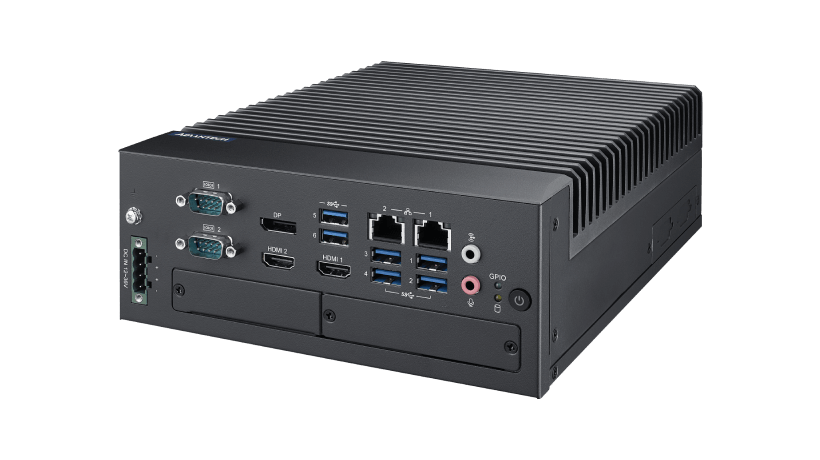
Figure 1: The MIC-785 IPC base configuration.
DisplayPort and HDMI outputs also provide connections for operator human-machine interfaces (HMIs), while dual LAN ports support networked cameras, machine-to-machine communications, and connections to wider management infrastructure. Similarly, the 12 to 36 VDC power input provides flexibility when installing the MIC-785 alongside existing industrial power infrastructure.
The platform also provides internal expansion options for applications requiring additional functionality. A PCIe Gen 5 x4 NVMe M.2 interface enables connections to high-speed storage, which can be particularly useful when machine vision systems need to capture or retain large volumes of image data. A second B-key M.2 interface allows designers to add 5G networking for installations where wired network connections are impractical.
For external expansion, Advantech’s Flex I/O architecture provides additional application-specific interfaces to the MIC-785 front panel, while MIC-78 Series i-Modules support PCIe expansion options for capabilities including discrete GPU acceleration. Together, these technologies allow industrial system architects to configure the host platform and its surrounding interfaces within a unified modular ecosystem.
GPU i-Modules for Machine Vision and Edge AI Acceleration
GPU i-Modules extend the MIC-785 architecture for applications whose machine vision or edge AI workloads require discrete parallel acceleration. In this configuration, the AMD CPU remains the high-performance host processor, handling general-purpose and latency-sensitive CPU workloads and system orchestration, while the GPU provides additional resources for highly parallel processing tasks.
The MIC-78 Series i-Modules provide PCIe expansion options for this purpose. For example, the MIC-78MG30, shown in Figure 2, provides a PCIe Gen 5 x16 slot that supports GPU cards up to 250 W, enabling substantially greater acceleration resources to be integrated with the MIC-785. This option also includes two additional PCIe add-on card slots and dual front-accessible 2.5-inch storage bays for easy storage expansion and maintenance.
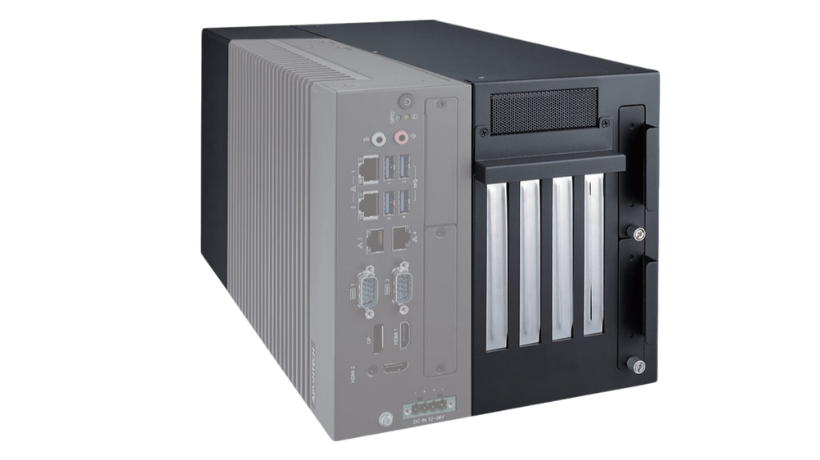
Figure 2: The MIC-78MG30 GPU expansion module.
Understandably, higher-power compute configurations can introduce additional thermal-management requirements. For the MIC-78MG30, an embedded cooling fan enables an edge compute configuration to operate at -20°C to +35°C when paired with 65 W TDP CPUs—the default rating for the MIC-785 AMD CPU options.
With an IP30 rating and an industrial-grade mechanical design, the MIC-78MG30 i-Module remains well suited for industrial operating environments. Furthermore, it offers scalable system expansion that allows GPU capability to be matched to application requirements rather than defining entire systems around a fixed accelerator.
An example machine vision system may combine the MIC-785 with a MIC-78MG30 fitted with a compatible GPU card and a PCIE-1674 four-port PoE+ GigE Vision frame grabber card connected to four industrial cameras. Illustrated in Figure 3, this configuration demonstrates how image acquisition, host processing, and GPU acceleration can be combined within Advantech’s modular architecture while allowing for flexible expansion and changes over the system lifetime.
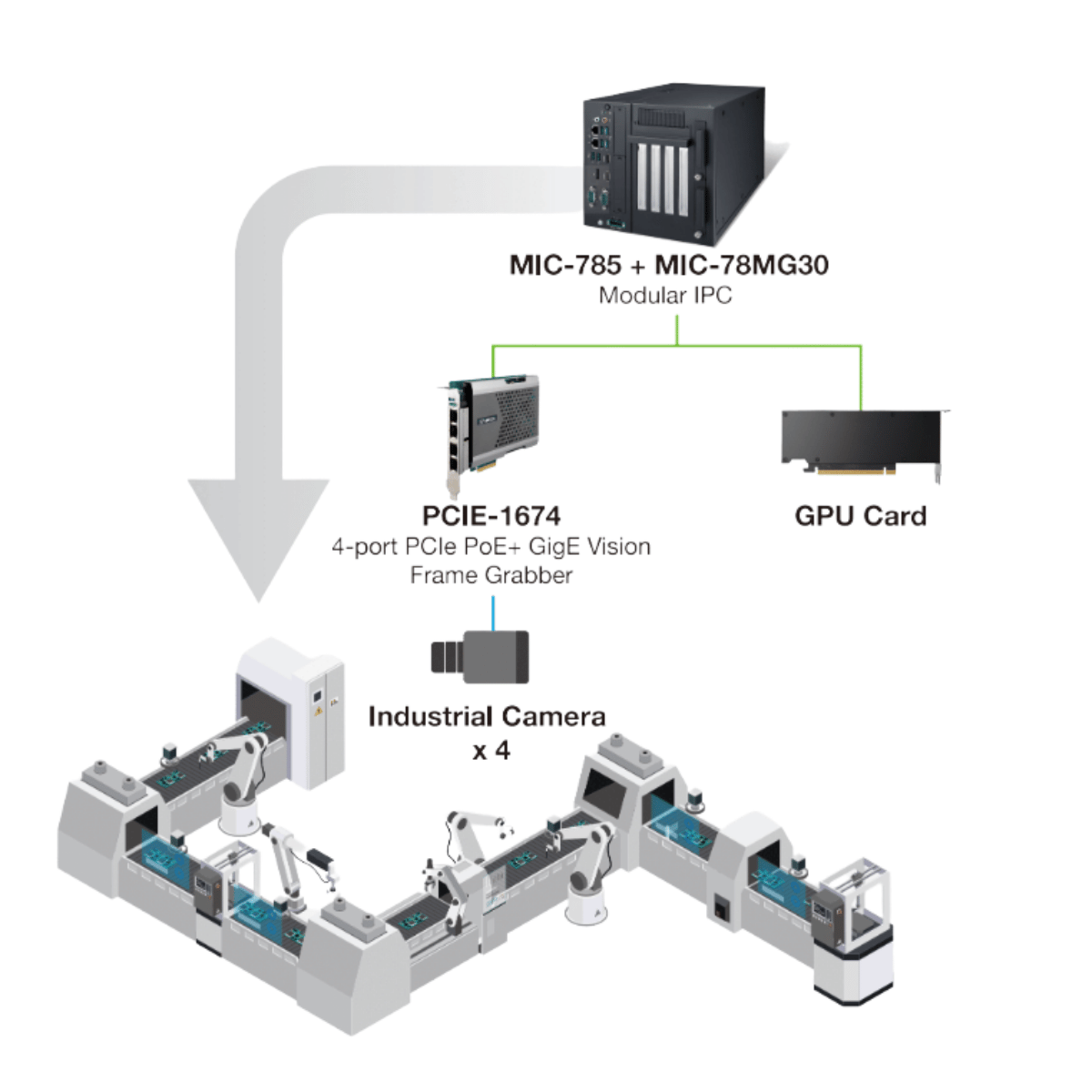
Figure 3: An example machine vision configuration using the MIC-785 and MIC-78MG30
SIDEBAR: Flex I/O — Configuring Interfaces Around the Machine
While i-Modules provide larger PCIe and GPU expansion capabilities, Advantech’s Flex I/O solutions address external interface variations between industrial machines. Flex I/O allows system architects to adapt individual system connectivity while retaining the underlying MIC computing platform.
Fitting into the MIC-785 front panel expansion slots, Advantech’s Small, Regular, and Advanced Flex I/O approaches address a wide range of interface expansion requirements while preserving connection accessibility. For machine vision applications, Flex I/O provides connectivity for industry-standard GigE Vision and USB3 Vision cameras through dedicated Ethernet and USB 3.2 expansion modules. These modules can also add functionality that includes PoE, local high-speed storage, and industrial digital I/O for machine encoders and sensors.
The 98910770501 4-port GbE PoE module, for example, provides four PoE-capable Gigabit Ethernet interfaces. This enables the MIC-785 to support system configurations using PoE-powered GigE Vision cameras, allowing data and power to be delivered over the same cable to simplify system installation by reducing the number of separate connections.
For more data-intensive configurations, the 98910770350 combines 2.5 GbE networking with an M.2 2280 NVMe storage interface. Higher-bandwidth networking enables systems to support more demanding camera and data transfer requirements, while local NVMe storage provides a high-speed destination for applications that capture images for defect analysis, inspection records, or other logging requirements.
For system expansion using USB devices, the 98917701100 offers eight USB 3.2 ports that support data rates up to 5 Gbps. Each USB port is supported by an independent USB controller to maximize performance while reducing CPU overhead and system resource demands. This module is particularly useful for machine vision systems requiring many USB cameras or additional USB-connected sensors or peripherals. It increases the number of devices that can be connected to a system without changing the underlying computing platform.
The practical benefit of highly modular systems is configurability around individual machine requirements rather than forcing every machine to use the same interface set. Combined with the MIC-785’s processor options and i-Module ecosystem, Flex I/O can reduce the need for broad, platform-level customization and make it easier to adapt a common computing architecture across multiple machine variants.
Conclusion
Industrial machine vision applications can vary substantially in their processing, acceleration, connectivity, and I/O requirements. A single fixed hardware configuration can therefore be inefficient for building many machines across heterogeneous deployments.
The MIC-785 addresses this challenge through two complementary layers of scalability. Its AMD processor portfolio provides scalable, high-frequency host CPU resources for latency-sensitive machine vision, associated industrial workloads, and general-purpose processing. Advantech then extends this foundation through a modular ecosystem that enables scalable discrete GPU integration for parallel vision and AI workloads, PCIe-based expansion for frame grabbing and industrial camera connectivity, and I/O modules for additional application-specific interfaces.
By building industrial systems around a configurable base architecture, developers can address different machine vision performance tiers while retaining a path for system evolution as requirements change. As camera resolution and count, AI model complexity, processing demands, and industrial connectivity continue to evolve, the MIC-785’s modular flexibility can help machine builders scale individual configurations without having to abandon the underlying platform architecture.
This article originally published on Embedded Computing Design. To learn more about the MIC-785, contact your local Advantech sales representative or visit the www.advantech.com.
Explore more of Advantech's AMD solutions by visiting our website or downloading our eBook.
-50/MIC-78520251127165916.png)