As manufacturers digitize operations and expand across regions, one challenge consistently resurfaces: how to modernize decades of reliable but aging Modbus I/O without disrupting existing OT environments. Traditional Modbus devices were never designed for multi-site operations, centralized control, or today’s cybersecurity expectations. Yet these devices remain embedded in production lines worldwide, forming the backbone of critical processes.
Many organizations assume modernization requires costly retrofits, network redesigns, or extensive new hardware deployments. Others rely on fragmented remote-access methods that increase operational complexity and expose security gaps. Across multi-site operations, the limitations become clear: inconsistent device configurations, lack of real-time visibility, and the ongoing need for on-site troubleshooting all drive up OPEX and slow response times.
Advantech’s ADAM-6000 and ADAM-6200 series offer an alternative path—one that strengthens security, improves remote access, and standardizes multi-site device management while preserving the existing OT infrastructure and the legacy Modbus devices already in place.
.
The Hidden Cost of Traditional Modbus Management Across Multiple Sites
Modbus was designed for local, trusted networks. Its simplicity made it a staple in industrial automation, but this simplicity also restricts scalability. Multi-site organizations often struggle to gain unified visibility into I/O conditions because each facility operates Modbus devices in isolation, with different configurations, firmware versions, and diagnostic approaches. Over time, these inconsistencies create maintenance delays, troubleshooting inefficiencies, and a lack of operational predictability.
Operational cost is a major concern. Without centralized insight, even minor issues—such as a misconfigured channel or ambiguous sensor reading—may require dispatching technicians across facilities or regions. For global manufacturers and system integrators, these repeated site visits accumulate into significant labor, travel, and downtime costs. Meanwhile, cybersecurity expectations continue to rise. Traditional Modbus TCP provides no encryption or authentication, increasing risk when organizations attempt to integrate remote monitoring or cross-site workflows.
These challenges highlight the need for a modernization approach that delivers secure, centralized management without forcing OT teams to overhaul systems that already work reliably.
A Modernization Strategy That Preserves Existing OT Investments
For modernization to be adopted at scale, the approach must be minimally disruptive. Industrial operators cannot afford production downtime, large-scale hardware replacement, or complex network reconfiguration. Any solution must work with existing wiring, PLC logic, and operational workflows, while reducing—not increasing—the burden on OT and IT teams.
The most effective path is one that strengthens security, introduces centralized visibility, and enables remote configuration and maintenance, all without altering the underlying OT infrastructure. This ensures continuity for operations teams while giving organizations the tools required to improve efficiency and prepare for long-term digital transformation.
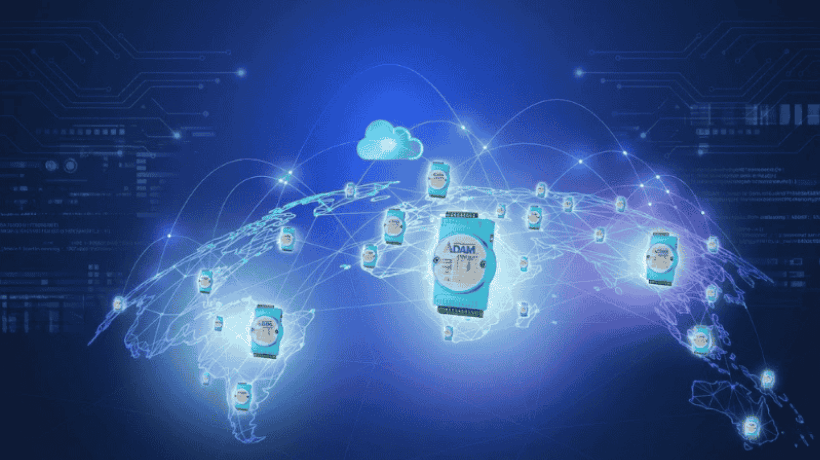
Advantech’s ADAM-6000/6200 series exemplifies this model. These modules enhance the capabilities of legacy Modbus installations by adding modern security, remote access functions, and centralized management—allowing distributed factories to operate as a cohesive, well-coordinated network of assets.
How ADAM-6000/6200 Enables Secure, Cross-Site Modbus Remote Management
Advantech’s ADAM series brings modernization to legacy Modbus environments through a combination of secure communication, device authentication, centralized visibility, and remote lifecycle control. These advancements help organizations unify multi-site management without replacing the Modbus I/O devices they depend on.
One of the most critical improvements is secure communication. ADAM-6000/6200 modules support TLS encryption, ensuring that data exchanged between devices and management systems remains protected from interception or tampering. This directly addresses the inherent insecurity of Modbus TCP and helps industrial organizations meet modern OT cybersecurity requirements.
Device identity is reinforced through support for X.509 certificates, allowing each module to authenticate itself before transmitting or receiving sensitive information. This strengthens access control and prevents unauthorized devices from entering the operational domain. IP allowlisting further restricts communication to trusted sources, minimizing exposure and reducing the attack surface.
Equally impactful is the shift toward centralized visibility. Instead of logging into devices individually or relying on local staff to confirm status, engineers can access real-time I/O values, diagnostic information, firmware versions, and configuration data for all sites from a unified interface. This eliminates configuration drift and enables more informed decision-making across distributed plants.
Remote lifecycle management extends these benefits even further. ADAM modules support remote diagnostics, batch configuration, and over-the-air firmware updates—all of which significantly reduce the need for on-site maintenance. When an issue occurs, engineers can quickly determine whether the root cause is wiring, configuration, or sensor-level behavior without setting foot in the facility. For multi-site organizations, this shift dramatically lowers OPEX and shortens mean-time-to-repair.
Crucially, all of these capabilities operate without requiring changes to the existing OT infrastructure, ensuring that modernization does not disrupt production or introduce new operational risks.
Centralized Management That Reduces OPEX and Strengthens Reliability
Once organizations adopt centralized, secure remote management, the operational advantages quickly become clear. Maintenance teams spend less time traveling between facilities and more time proactively addressing performance issues. Distributed factories benefit from standardized configuration, consistent firmware management, and unified dashboards that improve traceability and oversight.
IT and OT teams also gain confidence in the security posture of their systems. Because communication is encrypted and access is strictly authenticated, remote management can be implemented without expanding exposure or altering established OT boundaries. This balance—modern capability with minimal disruption—is essential for industries where uptime and stability are paramount.
Over the long term, companies benefit from lower operational costs, reduced downtime, improved cross-site consistency, and better resource allocation. System integrators, meanwhile, can scale support across customers more efficiently, offering higher-value services without increasing field labor requirements.
Challenge Solved
|
ADAM Approach
|
Core Benefit
|
Legacy security risks in Modbus environments
|
TLS encryption, X.509 authentication, and IP allowlisting
|
Strengthens OT cybersecurity and protects critical assets
|
High operational cost and maintenance complexity
|
Centralized remote diagnostics, over-the-air updates, and unified configuration management
|
Reduces field service labor and minimizes site visits
|
Disruptive or costly upgrade paths
|
Non-invasive deployment that preserves existing OT infrastructure
|
Modernizes legacy Modbus I/O without replacing hardware
|
Inconsistent visibility across factories
|
Centralized cross-site Modbus monitoring
|
Provides consistent, real-time insight across all facilities
|
Conclusion
Legacy Modbus I/O does not need to be replaced to meet modern expectations. By adding secure communication, authenticated access, centralized visibility, and remote configuration capabilities, Advantech’s ADAM-6000 and ADAM-6200 series provide a practical and sustainable path to modernization. These modules allow organizations to strengthen security, streamline multi-site management, and reduce operational costs—all while preserving the stability and reliability of their existing OT infrastructure.
For manufacturers and system integrators operating across multiple facilities, this approach delivers the best of both worlds: modern performance and security, with zero disruption to the equipment and processes that keep production running.


/ADAM-6015_03_S20190725152608.jpg)
/ADAM-6060_03_S20190725162316.jpg)
/ADAM-6052_03_S20190725161934.jpg)
/ADAM-6256_03_S20190730123222.jpg)
/ADAM-6224_03_S20190730122722.jpg)