

Key Takeaway
Advantech and Henghua have jointly developed a standardized solution integrating edge computing hardware, management software, and Edge AI to enable scalable AIDC deployment and lifecycle management.
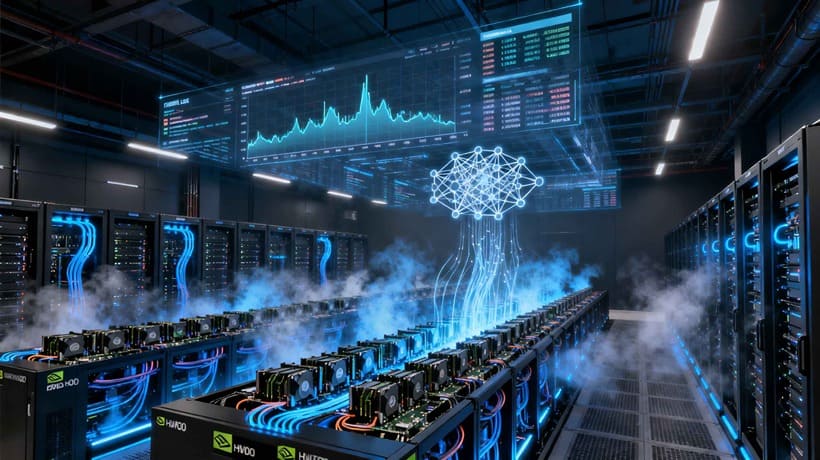
With the rapid growth of generative AI and large language models (LLMs), demand for AI data centers (AIDCs) in China continues to rise. High-density racks, liquid cooling systems, energy management, and intelligent operations and maintenance (O&M) have become essential industry requirements. However, traditional data center construction and management models face growing challenges in deployment efficiency, energy conservation, carbon reduction, and predictive maintenance as demand for large-scale deployment and sustainable operations increases.
Advancing AI Computing: Two Industry Leaders Join Forces
Four Key Challenges Facing Traditional Architectures in High-Density Computing Environments
- High Costs and Long Deployment Times: Traditional centralized architectures require large equipment with high procurement costs and lengthy deployment processes, making it difficult to meet the demands of rapid, large-scale AIDC construction.
- Difficulties in Integrating Data from Multiple Equipment Brands: Liquid cooling systems, air conditioning systems, UPS systems, and power meters use different communication protocols, resulting in fragmented data that limits power usage effectiveness (PUE) optimization and detailed energy management.
- Lack of Predictive Maintenance Capabilities: Existing O&M practices largely rely on alarms triggered after equipment abnormalities occur. A single point of failure in the monitoring system may cause large-scale computing service interruptions, making it difficult to meet AIDC requirements for high reliability and continuous operations.
- High Deployment Costs for In-House AI Models: Although companies have developed lightweight AI models for energy optimization and anomaly detection, the lack of standardized Edge AI inference hardware results in longer deployment and customization times, increasing overall implementation costs.
To address these challenges, Advantech and Henghua have jointly developed a standardized solution integrating edge computing hardware, management software, and Edge AI technologies to support AIDC construction and O&M throughout its lifecycle. The solution helps improve data center deployment efficiency, operational stability, and energy management performance while providing a scalable and replicable deployment model.
Building an Integrated Hardware and Software Architecture for AIDC
- Sensing Layer: Sensors, smart power meters, and liquid cooling systems are deployed for on-site data acquisition. Among these, data center-specific area-wide temperature sensors developed by Advéco, an Advantech subsidiary and smart building space solutions provider, enable real-time cold aisle temperature monitoring, providing visibility into data center environmental conditions.
- Edge Control Layer: The customized ECU-442 gateway serves as the core, integrating data acquisition and on-site equipment control for power supply, air conditioning systems, and rack environmental and equipment monitoring. By replacing some functions of traditional large centralized servers, it improves deployment flexibility and management efficiency.
- Software and AI Application Layer: Customized IoT Edge data acquisition software and AI Agents support three operating modes: data acquisition, centralized air conditioning control, and AI-powered energy optimization. The system provides automatic data retransmission after network interruptions, local data storage, and rapid switching between primary and backup systems. By deploying in-house AI algorithms independently at the edge, the solution enables energy optimization and equipment failure prediction. Advantech's PHM (Prognostics and Health Management) solution can also identify potential failures in air conditioning systems, UPS systems, and liquid cooling equipment, reducing the risk of unplanned downtime.
- Cloud O&M Management Layer: The solution connects to Henghua's independently developed DCAIM intelligent AIDC O&M platform, providing centralized visibility into PUE, energy consumption, AI control records, and equipment alarms. Meanwhile, Advantech's all-in-one energy and carbon management solution automatically calculates energy consumption and carbon emissions, supporting related reporting requirements and integrating data center construction, monitoring, energy management, and intelligent O&M.
Integrated Edge AI Solutions Help Data Centers Reduce Costs, Ensure Stable Operations, and Improve Efficiency
The integrated Edge AI solution has been successfully deployed in multiple projects, helping data center customers reduce costs, enhance operational stability, and improve efficiency.
- Lower Deployment Costs: Edge gateways replace traditional large servers, reducing hardware procurement costs by approximately 55% and deployment and testing time by 70%, accelerating AIDC construction.
- Improved Energy Efficiency: AI Agents dynamically control liquid cooling and air conditioning systems, reducing annual electricity consumption in large AI data centers by 10%–30% while continuously optimizing PUE.
- Lower Barriers to Edge AI Adoption: The standardized AI Agent platform eliminates the need to build a separate AI inference environment, reducing AI application development time by 80% and accelerating the adoption of intelligent O&M.
- Stable System Operations: The solution supports automatic switching between primary and backup gateways, operation log retention, and up to three years of local data storage. Offline data buffering and automatic retransmission further reduce the risk of system interruptions.
- Improved O&M and Carbon Management Efficiency: Advantech's PHM solution enables early detection of potential equipment failures, reducing manual inspection frequency by 80%. Automated carbon emissions calculations and report generation also reduce manual management workloads.
As the AIDC industry continues to grow rapidly, requirements for data center operational efficiency and energy management are also increasing. Lightweight infrastructure, intelligent management, and sustainability have become important development directions for next-generation data centers. Looking ahead, Advantech and Henghua will continue strengthening the integration of edge computing hardware and software technologies, working with industry partners to build green, energy-efficient, highly reliable AI computing infrastructure.